

Unlocking Student Engagement With Role-Based Group Work
When students actively talk, solve problems, and share ideas, science comes alive. Active participation is the engine that drives deep learning. Research in STEM education shows that structured group work boosts student engagement, builds self-efficacy, and leads to higher course success [1,2].
However, true engagement requires more than just telling students to "work together." It takes clear structure; by assigning distinct roles to every team member, you can give each student a clear purpose and a reason to contribute.
Here are some ways group work can be used in Catalyst’s platform to engage students across lab, lecture, and recitation while keeping your grading load to a minimum.
Roles Give Each Student a Clear Purpose
Group work functions best when every student has a meaningful part to play. In our platform, we can build custom assignments where upon launching, students select a role they will play in their group.
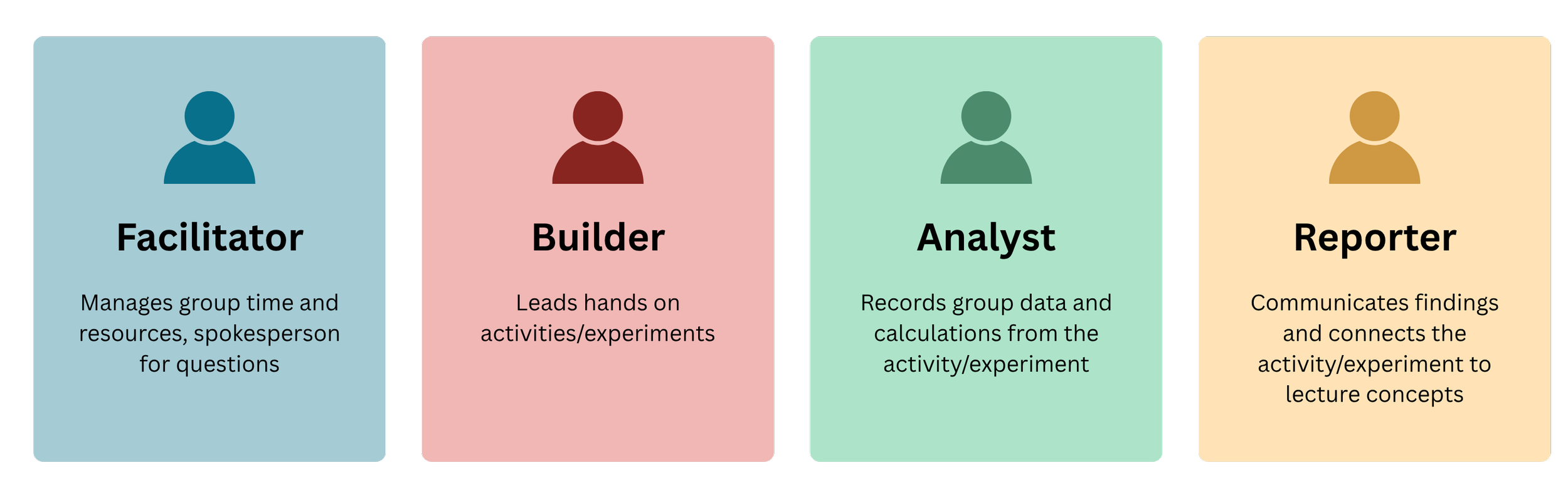
Because each role receives a different prompt, students cannot sit back and passively watch. They must talk, share perspective, and work together to complete the assignment. This role-based structure helps students build confidence and take ownership of their learning [1].
Activate Learning in Any Classroom Space
Engagement does not have to stop when students step out of the lab or classroom. Catalyst’s platform lets you bring interactive role-based group work into all learning spaces:
In Lecture:
Turn 10 minutes of passive listening into an active group problem-solving session in Spark.
In Recitation:
Have teams tackle complex worksheets or case studies with divided role responsibilities.
In Lab:
Give science partners distinct jobs during real-time data collection in Labflow.
When students engage with course content in multiple ways, they stay interested and retain information longer.
Grade Groups Effortlessly with Bulk Grading
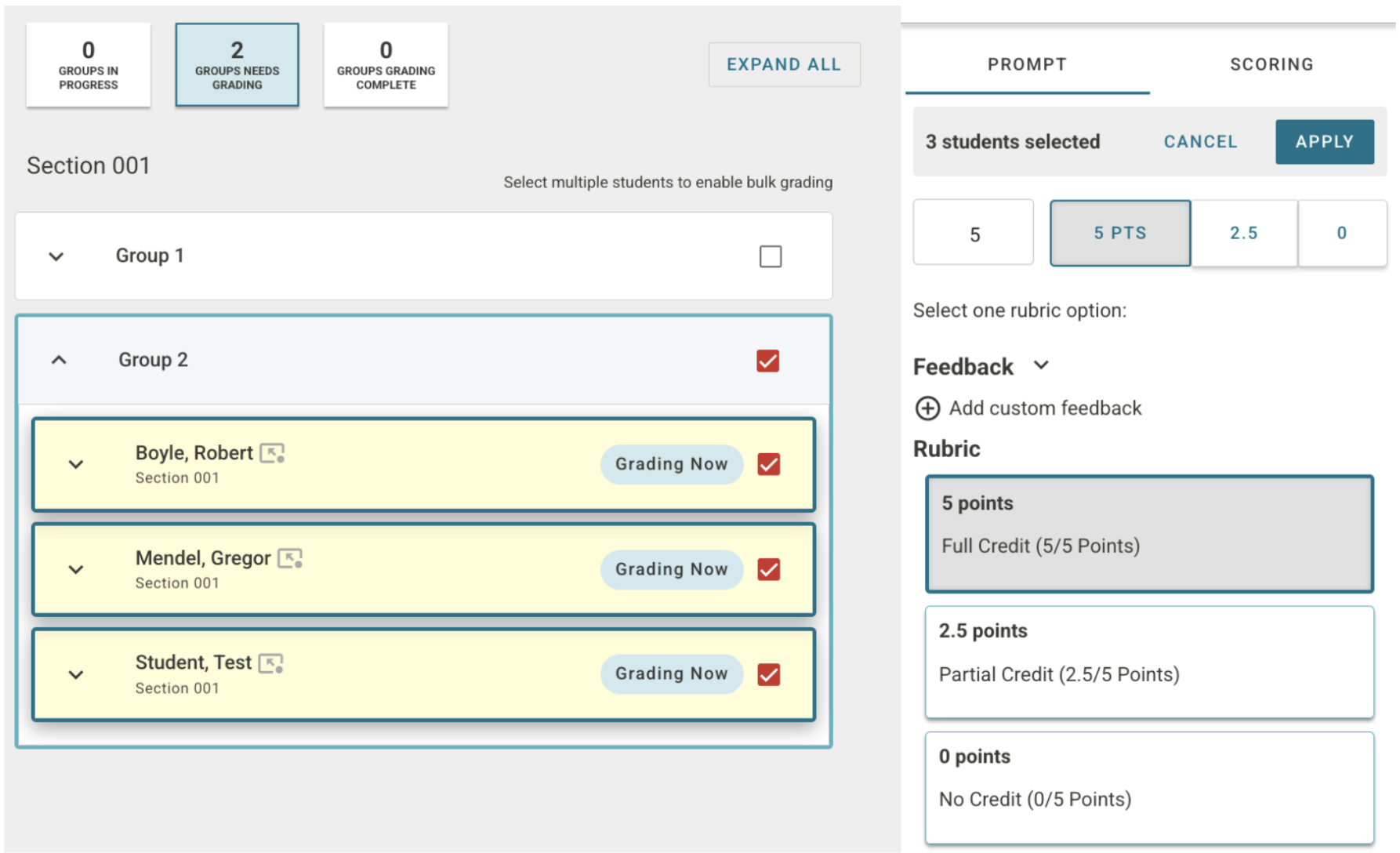
Fostering rich classroom engagement shouldn't mean staying up all night grading papers. Our bulk grading functionality streamlines assessment so you can focus on teaching:
One-Page Review: View all role-specific responses from a single group on one screen.
Instant Group Scoring: Apply a shared grade to the entire group with one click.
Targeted Feedback: Send group-wide comments, or add quick private notes for individual students.
You get a clear window into how each group collaborated without adding hours to your workload.
Elevate Student Participation Today
Group work is a powerful tool you can use to create an active, vibrant classroom. With role-based prompts and bulk grading in our platform, you can turn every student into an active participant.
Have questions about implementing group work or interested in enabling this feature in your Catalyst course? Reach out to your Faculty Success Manager (FSM)!
More on Group Work from Catalyst Education
Sources
[1] Aikens, M. L., & Kulacki, A. R. (2023). Identifying group work experiences that increase students’ self-efficacy for quantitative biology tasks. CBE - Life Sciences Education, 22(1), 1-20. https://doi.org/10.1187/cbe.22-04-0076
[2] Tanner, K. D. (2013). Structure matters: Twenty-one teaching strategies to promote student engagement and cultivate classroom equity. CBE - Life Sciences Education, 12(3), 322–331. https://doi.org/10.1187/cbe.13-06-0115